Deploying Kubernetes in production means choosing between several families of solutions: bootstrap tools (kubeadm), automation (Kubespray), integrated distributions (Talos, RKE2, k0s), declarative management (Cluster API) or managed services (GKE, EKS, AKS). This guide compares these approaches and helps you choose according to your context: level of control, available skills, target environment and the maintenance load you can accept.
What you will learn
- Categorize the Kubernetes deployment solutions
- Compare kubeadm, Kubespray, Talos, RKE2, k0s and Cluster API
- Decide between self-managed and managed according to your constraints
- Identify the solution that fits your environment
This guide is only about production. A local development cluster has other constraints, creation in a few seconds and a resource cost close to zero: it belongs to dedicated tools, kind for this course, or Minikube (in French) and k3d (in French). Mixing up the two families leads to badly calibrated choices in both directions.
Quick recommendation
This table is enough to decide in most cases. Read it by the left column: your context drives the choice, not the intrinsic qualities of the tools. The rest of the guide explains why each row falls the way it does, and what the chosen solution will cost you in return.
| Context | Recommended solution |
|---|---|
| Learning Kubernetes in depth | kubeadm |
| On-premises with Ansible | Kubespray, if 1.36 is enough |
| Hardened security, immutability | Talos Linux |
| Enterprise, compliance, Rancher | RKE2 |
| Edge, IoT, simple deployment | k0s |
| Multi-cluster, hybrid cloud | Cluster API |
| Small team, public cloud | GKE, EKS, AKS |
| European sovereignty | OVHcloud, Scaleway |
What are the 5 categories of solutions?
The term "deploying Kubernetes" covers very different approaches. The table below ranks them by the share of responsibility you keep, from the heaviest (you manage everything) to the lightest (the provider manages the control plane):
| Category | Examples | Responsibility |
|---|---|---|
| Bootstrap | kubeadm | You manage everything: OS, network, upgrades |
| Automation | Kubespray | Automates the installation, you manage the infrastructure |
| Distribution | Talos, RKE2, k0s | Integrated solution, you manage the nodes |
| Declarative | Cluster API | You describe clusters as Kubernetes objects |
| Managed | GKE, EKS, AKS | The provider manages the control plane |
Bootstrap tools
A bootstrap tool does one thing: turn machines that are already ready into a Kubernetes cluster. It provides neither the servers, nor the system, nor the upgrades. It is the category that leaves the most responsibilities to you, and also the one that teaches the most.
kubeadm
kubeadm is the Kubernetes project's official tool to initialize a cluster that follows the upstream standards.
- Vanilla Kubernetes: no fork, no modification
- Full control: you decide every component
- Official documentation: maintained by the Kubernetes project
- A base for learning: understand every installation step
- No provisioning: you manage the VMs or servers yourself
- Manual upgrades: no lifecycle automation
- Complexity: many steps for an HA cluster
- No commercial support: community only
kubeadm suits experienced teams who want to understand Kubernetes in depth or build a highly customized platform.
To put it into practice, the kubeadm guide details the installation of a multi-node cluster.
Automation tools
One step above bootstrap, these tools chain the installation steps themselves across a fleet of machines, and know how to replay them. The infrastructure remains yours, but the installation becomes reproducible and versionable, which changes everything as soon as you manage more than one cluster.
Kubespray
Kubespray automates the deployment of Kubernetes clusters with Ansible on bare metal or in the cloud.
- Ansible: fits into your existing automation workflows
- Flexibility: many variables to customize
- Multi-provider: bare metal, AWS, GCP, Azure, OpenStack
- Vanilla Kubernetes: stays close to upstream
- Learning curve: requires knowing Ansible
- Slowness: playbooks can take long on large clusters
- Maintenance: you manage the Ansible and Kubernetes upgrades
Kubespray suits ops or platform teams who master Ansible, on-premises or in a hybrid setup. The project is published on GitHub.
The lesson Kubespray helps you decide when to pick it and shows its installation with Ansible.
Self-managed Kubernetes distributions
These solutions offer a complete package with built-in technical choices.
Talos Linux
Talos Linux is a minimal, immutable, API-driven OS designed exclusively for Kubernetes.
- Immutability: no SSH, no shell, reduced attack surface
- API-driven: all configuration through an API, reproducible
- Security: hardening by default, no unnecessary packages
- Atomic upgrades: automatic rollback on failure
- Different paradigm: having no SSH can be disorienting
- Complex debugging: requires learning
talosctl - Young ecosystem: fewer resources than traditional distributions
Talos Linux suits GitOps and IaC-oriented teams, high security requirements and immutable clusters.
The lesson Talos Linux helps you decide when to pick it and shows how to create a local cluster.
RKE2
RKE2 is Rancher's Kubernetes distribution, oriented toward security and compliance (FIPS, CIS).
- Security: documented FIPS 140-2 builds, and a default configuration that satisfies most CIS checks, completed by the
cisprofile - Rancher integration: simplified multi-cluster management
- Simplicity: installation in a few commands
- Commercial support: SUSE/Rancher
- Structuring choices: embedded containerd, and Canal as the default CNI (other CNIs remain possible)
- Less flexible: fewer interchangeable components
- Vendor dependency: the Rancher ecosystem
RKE2 suits companies subject to compliance requirements, Rancher users and on-premises environments. Its documentation details the installation.
The lesson RKE2 helps you decide when to pick it and shows its installation.
k0s
k0s is a lightweight distribution, packaged as a single binary and simple to deploy.
- Single binary: very simple installation
- Lightweight: suited to edge and limited resources
- No dependency: nothing to install on the host system
- Multi-platform: bare metal, cloud, edge
- Smaller community: fewer resources
- Fewer features: a focus on simplicity
- Support: Mirantis, less well known than Rancher or Red Hat
k0s suits edge computing, IoT, simple deployments and teams looking for sobriety. The project is presented on k0sproject.io.
The lesson k0s helps you decide when to pick it and shows its installation with k0sctl.
Declarative lifecycle management
The previous categories install a cluster; this one manages it over time, from creation to deletion, by describing it as an ordinary Kubernetes object. The paradigm shift is real: you stop launching installations and start declaring a desired state, which only makes sense once you have several clusters.
Cluster API (CAPI)
Cluster API lets you manage Kubernetes clusters declaratively, like any other Kubernetes resource.
- Kubernetes-native: clusters managed as CRDs
- Multi-provider: AWS, Azure, GCP, vSphere, bare metal
- GitOps-friendly: infrastructure as code
- Scaling: declarative addition and removal of nodes
- Complexity: requires a management cluster
- Learning curve: many CAPI concepts
- Variable maturity: depends on the provider
Cluster API suits multi-cluster platforms, hybrid or multi-cloud strategies and industrialization. The Cluster API documentation describes the project.
Managed Kubernetes solutions
Managed services hand the management of the control plane over to the provider.
Hyperscalers
The three big providers all offer a managed Kubernetes, and the differences are less about Kubernetes itself than about integration with the rest of their catalog: identity, network, storage and billing. The deciding criterion is therefore rarely the Kubernetes service, it is the cloud where your other resources already live.
| Service | Provider | Strengths |
|---|---|---|
| GKE | Autopilot, GCP integration, Anthos | |
| EKS | Amazon | AWS integration, Fargate, EKS Anywhere |
| AKS | Microsoft | Azure integration, Arc, competitive cost |
Sovereign providers (Europe)
If data sovereignty matters, two European providers offer the same managed control plane model: hosting and applicable law remain European, at the price of a narrower catalog of ancillary services than the hyperscalers'.
| Service | Provider | Strengths |
|---|---|---|
| OVHcloud Managed Kubernetes | OVH | Sovereignty, competitive pricing |
| Scaleway Kapsule | Scaleway | Simplicity, French data centers |
Three signals point to managed without hesitation: a small team, which cannot carry a control plane on top of everything else; a wish to focus on applications rather than on infrastructure; and an already strong integration into a cloud ecosystem, where the cluster is just one more resource next to the databases and the storage.
Enriched distributions (non-vanilla)
These solutions add components, administration tools or security policies beyond upstream Kubernetes. They stay outside the five categories: they are platforms built on Kubernetes, chosen for their ecosystem more than for the way they install the cluster.
| Distribution | Vendor | Specifics |
|---|---|---|
| OpenShift | Red Hat | Complete PaaS, Source-to-Image, compliance |
| Tanzu | VMware | vSphere integration, multi-cloud |
| EKS Anywhere | Amazon | EKS on-premises |
| Mirantis Kubernetes Engine | Mirantis | Enterprise, ex-Docker Enterprise |
How far behind upstream is each solution?
None of the qualities listed above matters if the solution cannot install the version you need. This criterion is easy to overlook, and it can rule out a solution on its own.
Checked on 2026-11-13 against each project's publications (release pages and the Kubernetes version declared at the tag):
| Solution | Latest published version | Kubernetes shipped | Lag behind 1.37 |
|---|---|---|---|
| kubeadm | follows the Kubernetes project | 1.37.2 | none, by construction |
| Talos Linux | v1.14.6 | 1.37.1 by default | none |
| Kubespray | v2.32.0 | 1.36.4 by default | one minor |
| RKE2 | v1.37.2+rke2r1 | 1.37.2 | none |
| k0s | v1.37.2+k0s.1 | 1.37.2 | none |
The consequence fits in one line: a team that has to run 1.37 today rules out Kubespray, which stayed on 1.36.4. A one-minor lag remains tenable, since Kubernetes maintains three, but it cuts into your room to maneuver at the next release, and it flatly prevents you from installing the version this course teaches.
This table goes stale quickly, and that is the point to remember more than its values: on 23 September 2026, k0s had also stayed on 1.36.4, and it has shipped 1.37.2 since 6 November. Replay the commands below before deciding, rather than trusting a dated snapshot.
This lag is not a flaw of these projects: it is the price of integration. A distribution that ships Kubernetes with its CNI (the network plugin), its storage and its system components must validate them together, which kubeadm does not have to do since it only ships the control plane.
So check this point early, and at the source rather than in documentation that may be out of date:
gh api repos/rancher/rke2/releases/latest --jq '.tag_name'gh api repos/k0sproject/k0s/releases/latest --jq '.tag_name'gh api repos/siderolabs/talos/releases/latest --jq '.tag_name'gh api repos/kubernetes-sigs/kubespray/releases/latest --jq '.tag_name'Full decision table
This table crosses the seven solutions with the eight criteria that come up in trade-offs. No column is good everywhere, and that is the point: every solution trades one quality for another. First find the row, or the two rows, that really matter to you, then read the column that does best on them. Scanning the whole table gets you nowhere.
The scoring goes from 3, excellent, to 0, unsuitable.
| Criterion | kubeadm | Kubespray | Talos | RKE2 | k0s | CAPI | Managed |
|---|---|---|---|---|---|---|---|
| Control | 3 | 2 | 2 | 1 | 1 | 2 | 0 |
| Simplicity | 0 | 1 | 1 | 2 | 3 | 0 | 3 |
| Security | 1 | 1 | 3 | 2 | 2 | 1 | 2 |
| Maintenance | 0 | 1 | 2 | 2 | 3 | 1 | 3 |
| Multi-cluster | 0 | 1 | 1 | 2 | 1 | 3 | 2 |
| Edge and IoT | 0 | 0 | 2 | 1 | 3 | 0 | 0 |
| On-premises | 2 | 3 | 2 | 2 | 2 | 2 | 0 |
| Tracks 1.37 | 3 | 1 | 3 | 3 | 3 | 2 | 2 |
For the first five solutions, the last row comes from the measurement made above; for Cluster API and the managed services, it is an estimate, as their version depends on the provider. It is the only row of the table that can rule out a solution on its own: the other criteria offset each other, this one does not.
Decision tree
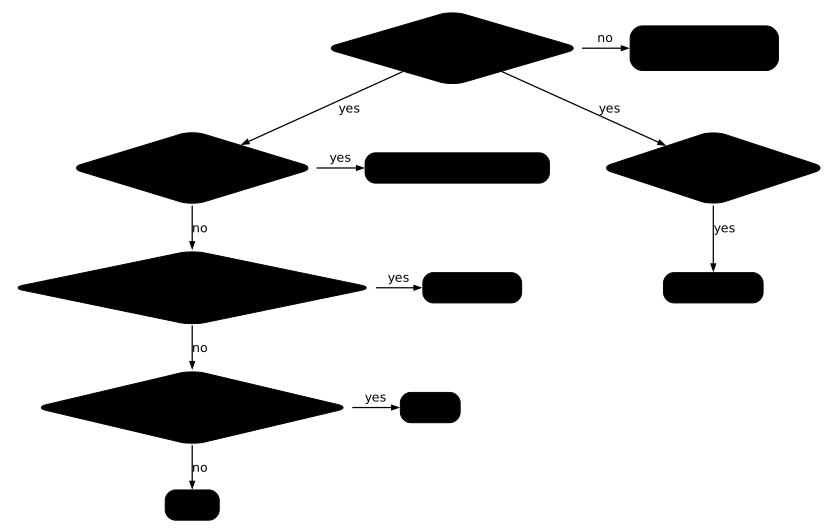
The previous table compares the solutions criterion by criterion; this tree separates them in the order in which the questions actually arise. The diamonds are the questions to settle, the rectangles the chosen solution. The first branch is the most decisive: without an experienced team, the managed service spares you from carrying the control plane. The Cluster API branch is independent of the others: it answers the case where several clusters have to be industrialized.
Key takeaways
- kubeadm is the official bootstrap tool: it gives full control and suits learning.
- Kubespray automates the installation with Ansible and suits an on-premises fleet whose team knows Ansible, if 1.36 is enough.
- Talos Linux is an immutable system driven by an API: very security-oriented, but with a different paradigm.
- RKE2 is the Rancher distribution oriented toward compliance and security, with commercial support.
- k0s fits in a single binary, stays lightweight, suits the edge and has shipped 1.37 since November 2026.
- Cluster API manages clusters declaratively and aims at industrializing several clusters.
- A managed service hands off the control plane: it suits a small team that focuses on its applications.
- The choice depends on your skills, your environment and the maintenance load you can accept; check the Kubernetes version shipped before deciding.
Test your knowledge
Seven questions on what really gets decided: who carries which responsibility depending on the chosen category, and what each solution requires in return.
Knowledge check
Check what you have learned with this interactive quiz
How it works
- The timer starts when you click Start
- Multiple choice, true/false and short answer questions
- You can move between questions
- Detailed results are shown at the end
Starts the quiz and the timer
Review
(0/0)Score by domain
A domain groups several guides and gets several questions, so its score is more reliable than a per-topic score, which often rests on a single question.
Summary
Strengths
No topic passed at 80% on at least two questions yet.
Weak areas
No topic below the pass mark.
Recommended next
Hints before you try again?
Continue the course: CNI, CSI and CRI: the extension interfaces of Kubernetes
A new full quiz with random questions
Work again only on the questions you missed